





Paul, I can tell you that the taper has texture from the coarse grinding wheel and
when I test fitted some cord to it the cord sort of acted like Chinese finger cuffs and
gripped the taper very good. It took some twisting to get it off.
I Think that some resin/adhesive and some tight binding along with the natural grip will hold very well.
I am going to bind the area of the transition a lot and very tight so I think that it should hold very well for a shot loaded core. You are so talented with your RC models and combining materials from both that and whips is one of the reasons that I like making my own whips. You can't get that if it's a bought whip.
I like your color choices. Very vibrant!
Good luck
Ron
The making of whip #2


-
Craig Frank

- Member
- Posts: 1233
- Joined: Thu 23. Jul 2015, 21:06
- Location: Arizona
-
Rachel McCollough

- Member of the Ring
- Posts: 9960
- Joined: Tue 21. Apr 2015, 11:37
- Location: South Mississippi, USA
- Contact:
-
Fritz Ehlers
Rachel , Fritz, i guess we all shall learn something together.
It seems logical that using it in the twisted tapered core that it would be dropping the
weight along the length of the core as the strands are dropped and distribute the weighting
in such a way that would promote a smooth roll out along with the energy distribution .
It seems logical that using it in the twisted tapered core that it would be dropping the
weight along the length of the core as the strands are dropped and distribute the weighting
in such a way that would promote a smooth roll out along with the energy distribution .
It's ok if you disagree with me.
I can't force you to be right.
I can't force you to be right.
-
Guest
Lead cored fishing line can be useful, but careful not to overuse it! It can and will add more thickness to a belly if you load the strands with it -- of course depending on how thich the line is. And using it for a twisted core can hinder the whip's action quite a bit, I tried a tapered twist out of that stuff inside a core strand and it didn't work out too well. Too much is too much.
- Pokkis
- Pokkis
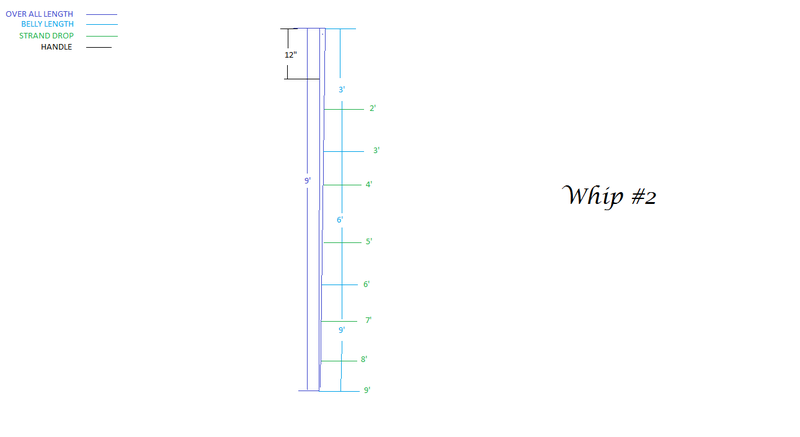
I am wondering about the shrinkage of the strands when doing a tapered twist.
I am using 2.5 X desired length for the plaited strands and that should work out more or less fine.
(then noting how much I have left over for future reference)
I don't know about how much to add to make up for the twist taking up strand length.
Length shrinkage is subject to how tight the twist is , at least that's logical, but there's got to be a starting point "rule
of thumb" like the 2 x length for strands , right?
I would hate to waste cord if I figure wrong. It's not overly expensive but money doesn't grow on trees.
Ron
I am using 2.5 X desired length for the plaited strands and that should work out more or less fine.
(then noting how much I have left over for future reference)
I don't know about how much to add to make up for the twist taking up strand length.
Length shrinkage is subject to how tight the twist is , at least that's logical, but there's got to be a starting point "rule
of thumb" like the 2 x length for strands , right?
I would hate to waste cord if I figure wrong. It's not overly expensive but money doesn't grow on trees.
Ron
It's ok if you disagree with me.
I can't force you to be right.
I can't force you to be right.
-
Rachel McCollough
- Member of the Ring
- Posts: 9960
- Joined: Tue 21. Apr 2015, 11:37
- Location: South Mississippi, USA
- Contact:
-
Guest
2.5x is more than enough, but with whip #2 it's still good to have just that. Looksi like you're taking the planning seriously, so I'm guessing you're measuring the strands both before and after. Take notes on how much leftover bits there are, do some basic calculation on the percentage and you'll see how the "plait length to strand length" ratio works with what you're doing. There are lots of variables that have a lot to do with plait count, plait angle and your plaiting style -- so the only way to learn is trial and error. That said, 2.5x will in any case be enough with a generous safety factor.
Also there's the fact all drops will not be exactly where you think. The whip will tell you where to drop, all you can do beforehand is take an educated guess. You're right, money doesn't grow on trees, but the leftover bits can be used for knots and non-whip stuff so waste is only something you choose to throw away. But running out of cord will totally suck more than having a foot or three extra. Trust me.
- Pokkis
Also there's the fact all drops will not be exactly where you think. The whip will tell you where to drop, all you can do beforehand is take an educated guess. You're right, money doesn't grow on trees, but the leftover bits can be used for knots and non-whip stuff so waste is only something you choose to throw away. But running out of cord will totally suck more than having a foot or three extra. Trust me.
- Pokkis
Thanks Pokkis.
I know from whip #1 that running short on a belly is not a lot of fun at all.
The planned drops are only for reference and like you said it most likely will change in
the real world. Matter of fact the whole diagram is for reference to notate later in W#3.
Rachel, as far as the TT goes, I found after twisting about a foot that the over all length of the strand was shortened to the end by about 3 inches or so and that gives me a good idea of where to start. That was a great idea thanks.
I know from whip #1 that running short on a belly is not a lot of fun at all.
The planned drops are only for reference and like you said it most likely will change in
the real world. Matter of fact the whole diagram is for reference to notate later in W#3.
Rachel, as far as the TT goes, I found after twisting about a foot that the over all length of the strand was shortened to the end by about 3 inches or so and that gives me a good idea of where to start. That was a great idea thanks.
It's ok if you disagree with me.
I can't force you to be right.
I can't force you to be right.
-
Robert Gage

- C Member
- Posts: 14189
- Joined: Fri 7. Feb 2014, 15:58
- Location: UK
I re-ground the end of the handle after rethinking the TT core and how I wanted to attach it.
It's ground down to accept the 4 plait beginning of the TT and still have the diameter the same as the rest of the handle with a built in taper for the 1st belly at the transition.
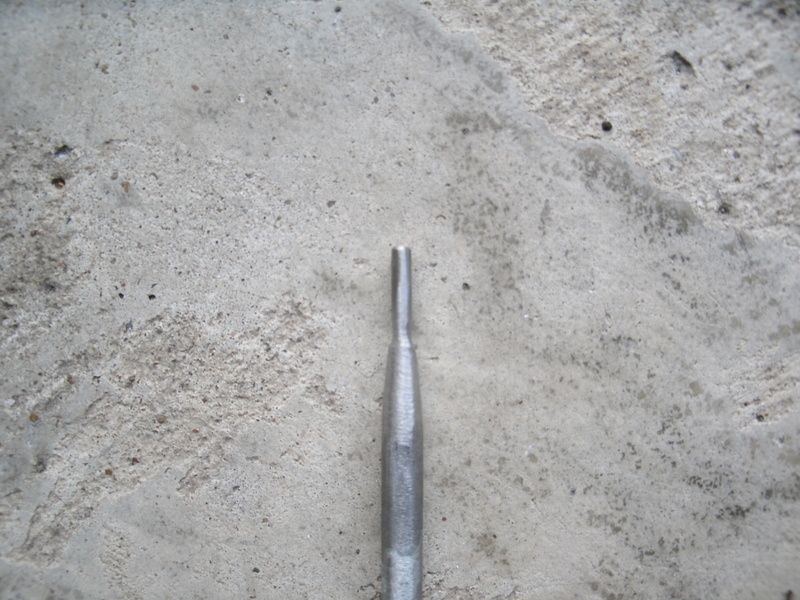
I also skimmed the surface of the rest of the handle to create a textured surface that will hold on to the cord and help prevent slippage.
For those who use the TT core for a bull whip, do you take it all the way to the finished length of the whip or
just to where the first belly will end + 1" per foot, then on the second belly use the TT to a little past (1" per foot of the length of the whip) and then the overlay to the end?
I am trying to decide which one will give the best over all taper and support.
I am leaning towards the latter.
It's ground down to accept the 4 plait beginning of the TT and still have the diameter the same as the rest of the handle with a built in taper for the 1st belly at the transition.
I also skimmed the surface of the rest of the handle to create a textured surface that will hold on to the cord and help prevent slippage.
For those who use the TT core for a bull whip, do you take it all the way to the finished length of the whip or
just to where the first belly will end + 1" per foot, then on the second belly use the TT to a little past (1" per foot of the length of the whip) and then the overlay to the end?
I am trying to decide which one will give the best over all taper and support.
I am leaning towards the latter.
It's ok if you disagree with me.
I can't force you to be right.
I can't force you to be right.
-
Grant Weaver
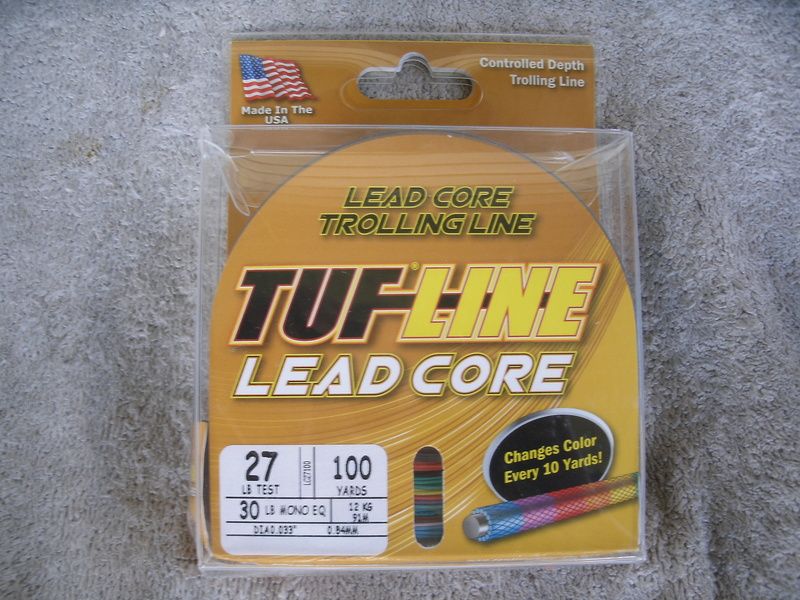
I have just loaded one core with the sinker line. It was a "pita" job for sure.
I honestly think BBs are easier to load.
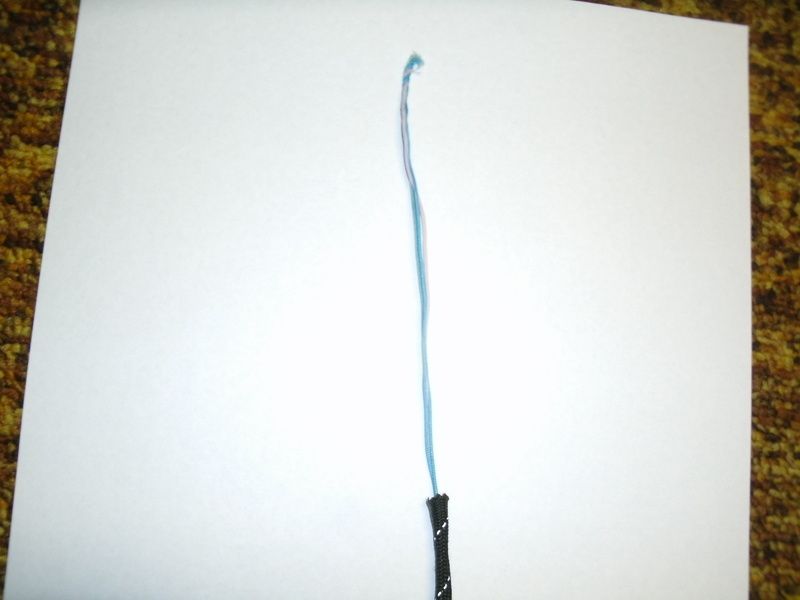
I don't think I like the results very much.
It's going to make the cord very stiff and if the TT strands are loaded with it I think that
it's too stiff and not a good reaction to the curl of the whip and the flow of energy.
Also it does not lay very flat and the plaiting and twisting the cords to make the TT core would
, to me , seem like plaiting with electrical automobile wire.
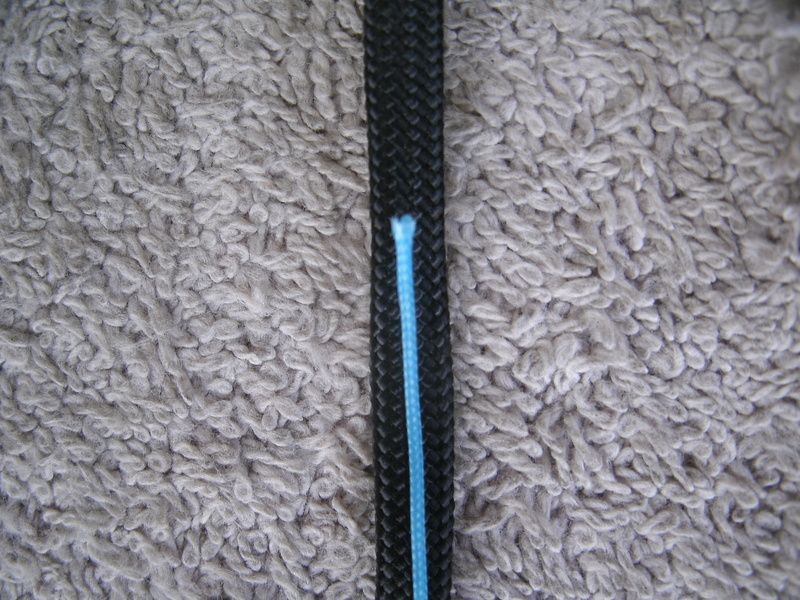
Below is the loaded cord just bent in the shape of an 's' like a snake ready to strike and it's staying like that.
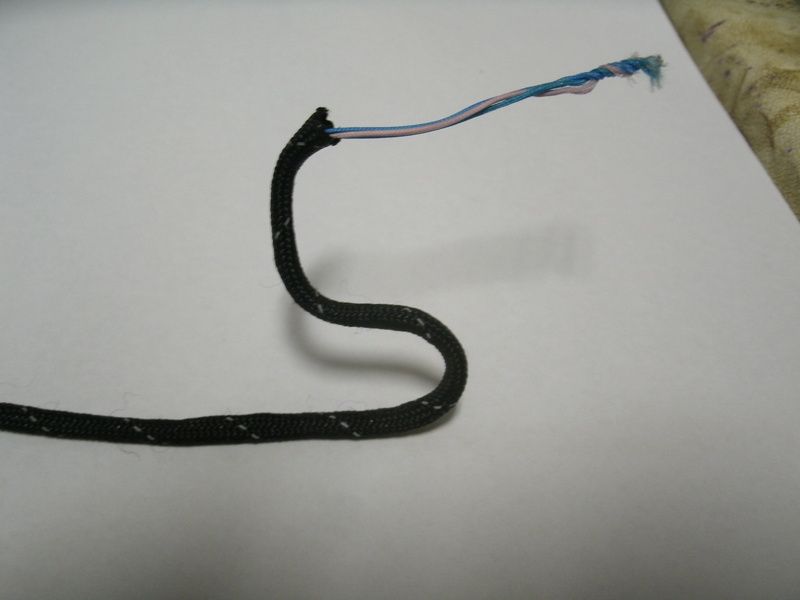
Any thing that inhibits the flow of energy could not be good , right?
What do y'all think?
I honestly think BBs are easier to load.
I don't think I like the results very much.
It's going to make the cord very stiff and if the TT strands are loaded with it I think that
it's too stiff and not a good reaction to the curl of the whip and the flow of energy.
Also it does not lay very flat and the plaiting and twisting the cords to make the TT core would
, to me , seem like plaiting with electrical automobile wire.
Below is the loaded cord just bent in the shape of an 's' like a snake ready to strike and it's staying like that.
Any thing that inhibits the flow of energy could not be good , right?
What do y'all think?
It's ok if you disagree with me.
I can't force you to be right.
I can't force you to be right.