




This is the Gallery of "Wolf Creek Whips" - Rachel McCollough

-
Robert Gage

- C Member
- Posts: 14189
- Joined: Fri 7. Feb 2014, 15:58
- Location: UK
-
Matt Henderson

- Member
- Posts: 912
- Joined: Sat 7. Jan 2017, 14:23
- Location: Sheffield, UK
Something I've been thinking of trying is microcord (1mm thick paracord). I know some people interweave it into their knots, but I was wondering if I could turn it into a whip in a similar way to high-strand Henderson work.
If I ever do try and live up to my namesake, I'll be sure to document my progress for the general hilarity of all :P.
If I ever do try and live up to my namesake, I'll be sure to document my progress for the general hilarity of all :P.
'Sic Parvis Magna'

-
Guest
-
Roy Partin

- C Member
- Posts: 3471
- Joined: Thu 23. Jan 2014, 16:01
- Location: Red River County, Texas
- Contact:
-
Rachel McCollough

- Member of the Ring
- Posts: 9960
- Joined: Tue 21. Apr 2015, 11:37
- Location: South Mississippi, USA
- Contact:
-
Matt Henderson
- Member
- Posts: 912
- Joined: Sat 7. Jan 2017, 14:23
- Location: Sheffield, UK
-
Rachel McCollough
- Member of the Ring
- Posts: 9960
- Joined: Tue 21. Apr 2015, 11:37
- Location: South Mississippi, USA
- Contact:
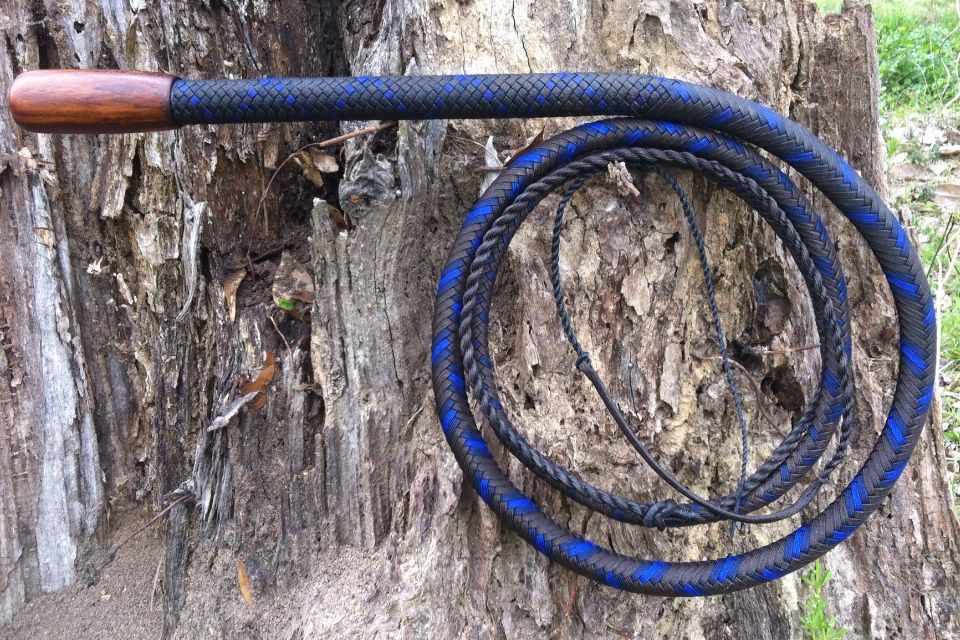
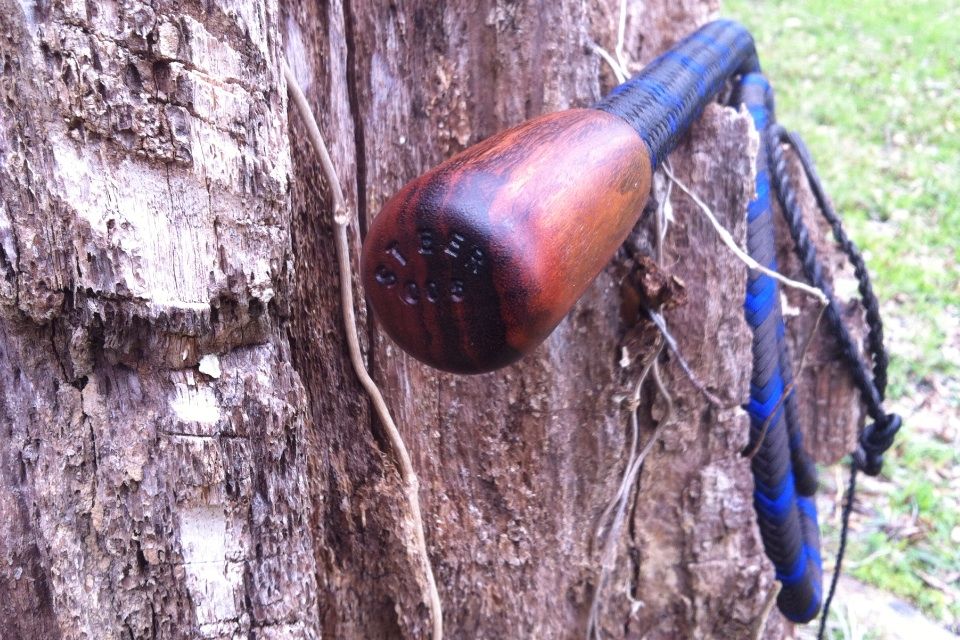
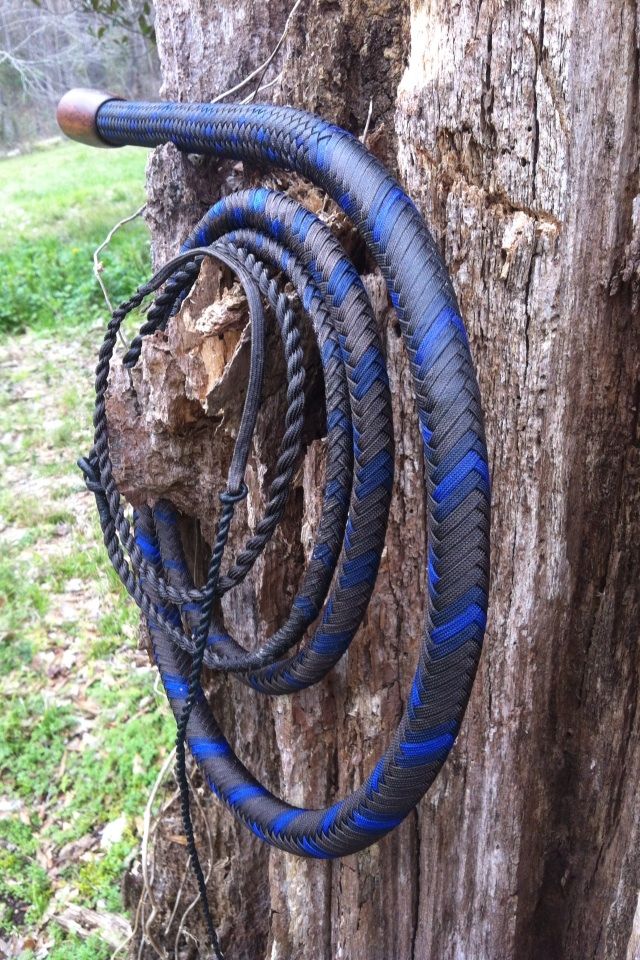
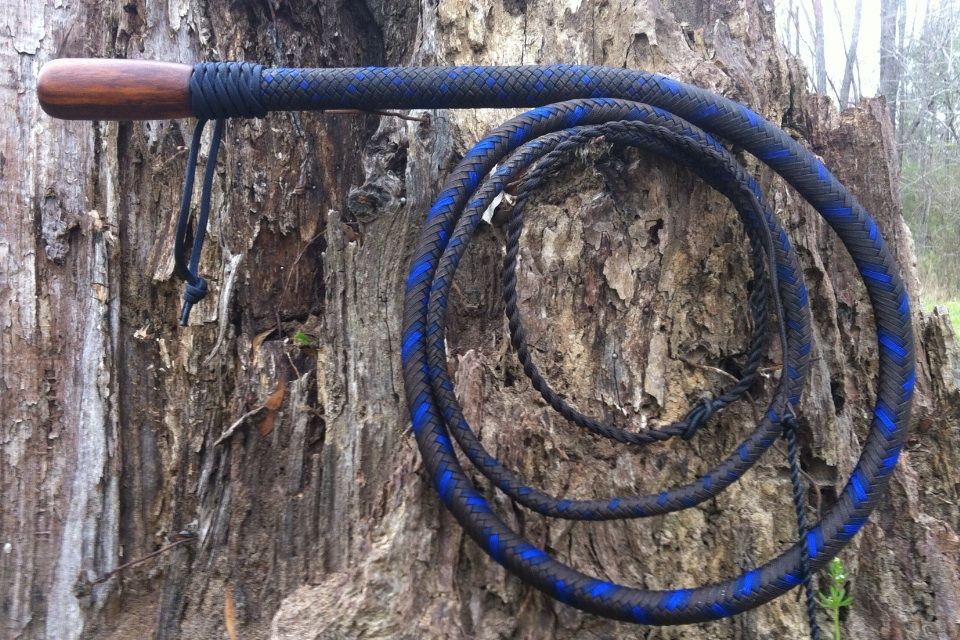
7' 18 plait Steer Whip in Acid Dark Brown with Midnight Blue and Electric Blue Accents, 12" fiberglass internal handle with some added lead weight at the heel and Gonçalo Alves grip,
Twisted English Eye. Loaded Twisted Taper Fall and tapered sinew cracker.
Added tie strand for hanging loop.
Material from Whip Nation.
Twisted English Eye. Loaded Twisted Taper Fall and tapered sinew cracker.
Added tie strand for hanging loop.
Material from Whip Nation.


Inch by inch.
-
Rachel McCollough
- Member of the Ring
- Posts: 9960
- Joined: Tue 21. Apr 2015, 11:37
- Location: South Mississippi, USA
- Contact:
-
Brandon "Sparky" Lam

- Member
- Posts: 1314
- Joined: Thu 20. Oct 2016, 21:59
- Location: Melbourne, Australia
-
Matt Henderson
- Member
- Posts: 912
- Joined: Sat 7. Jan 2017, 14:23
- Location: Sheffield, UK
-
Rachel McCollough
- Member of the Ring
- Posts: 9960
- Joined: Tue 21. Apr 2015, 11:37
- Location: South Mississippi, USA
- Contact:
-
Robert Gage
- C Member
- Posts: 14189
- Joined: Fri 7. Feb 2014, 15:58
- Location: UK
-
Sir Roger Tuson
-
Rachel McCollough
- Member of the Ring
- Posts: 9960
- Joined: Tue 21. Apr 2015, 11:37
- Location: South Mississippi, USA
- Contact:
-
Robert Gage
- C Member
- Posts: 14189
- Joined: Fri 7. Feb 2014, 15:58
- Location: UK
-
Rachel McCollough
- Member of the Ring
- Posts: 9960
- Joined: Tue 21. Apr 2015, 11:37
- Location: South Mississippi, USA
- Contact:
-
Robby Amper

- Member
- Posts: 4847
- Joined: Tue 30. Dec 2008, 20:40
- Location: Munich, Germany
- Contact:
Hello, everyone  Rachel, that steering whip - look and colors (and the wooden heel!) - awesome. Just awesome. But - sorry - one thing... The picture where the camera goes along the whip; the strands seem to have some kind of "waves" at the handle. I know that this perspective is a killer for every straight line, but I'd like to ask. Do you consider this whip a single crack whip, a working whip, or is it good for routines, too? I know that it's a steering whip, but I too know that a pan is made to prepare food, but some people use it to surf in the snow with it... So - what do you think? And - one more thing - what do you bill for such a wonderful tool?
The stockwhip.
Well, it really looks great. The simplicity makes it so beautiful. Harmonic in its look and appearance. No gimmicks. Just plain art. It's the same thing as with Roy's whips. Straight, 100% well made. Effective yet elegant. The best thing on that whip is, that it looks plain and simple. From a distance. But the closer you get, the better you can see the different styles of braiding. When you're close enough, this whip reveals its secrets. The binding. Usually those bindings are done onto the surface. So you always have some kind of "step". Here Rachel spared out a "bed" for the binding, which means that the binding and the wood are on the same level. Which makes it unique, again. Like I said in the beginning - this whip has some secrets. And I love that! Roy mentioned that he'd like to see a video with this stockwhip. Rachel already did one. But - perhaps - there will be another video...
An australian whip maker - from whom I have my habbit of using ridiculously long poly crackers... - created a 72 plait stockwhip. Actually more than one. Incredibly expensive - and incredibly useless. Imagine you crack that whip and one, two (or seven...) strands rip. Then you can shoot yourself in the head. Because that whip is ruined. So those whips are pure collector's items.
I mean... Usually whips were four plait in the old days. Around 1850 you paid between 10.00 and 15.00 USD for 10 whips. All in four plait. And before you say "Oh, how cheap!"... Those cowboys made between 1.00 and 3.00 USD a week. If you wanted to be really fancy - and I mean really fancy! - you had a whip, made in 8 plait. But the was very rare. And - believe it or not - the 12 plait thingie became popular with the Indiana Jones Whip, David Morgan created. From that moment on, nobody wanted an 8 plait whip, anymore. Sign of the times, I think.
I had some 8 plait whips, and they were really good. Simple, not fancy in any way, but they did a good job. And to end this post. I can't stand things like a "grapevine" binding anymore. It's like you love sweets. But if you eat too much of them for too long, you won't love them anymore.
To bind it all together: Rachel - you are doing a great and inspirational job.
Robby
Rachel, that steering whip - look and colors (and the wooden heel!) - awesome. Just awesome. But - sorry - one thing... The picture where the camera goes along the whip; the strands seem to have some kind of "waves" at the handle. I know that this perspective is a killer for every straight line, but I'd like to ask. Do you consider this whip a single crack whip, a working whip, or is it good for routines, too? I know that it's a steering whip, but I too know that a pan is made to prepare food, but some people use it to surf in the snow with it... So - what do you think? And - one more thing - what do you bill for such a wonderful tool?The stockwhip.
Well, it really looks great. The simplicity makes it so beautiful. Harmonic in its look and appearance. No gimmicks. Just plain art. It's the same thing as with Roy's whips. Straight, 100% well made. Effective yet elegant. The best thing on that whip is, that it looks plain and simple. From a distance. But the closer you get, the better you can see the different styles of braiding. When you're close enough, this whip reveals its secrets. The binding. Usually those bindings are done onto the surface. So you always have some kind of "step". Here Rachel spared out a "bed" for the binding, which means that the binding and the wood are on the same level. Which makes it unique, again. Like I said in the beginning - this whip has some secrets. And I love that! Roy mentioned that he'd like to see a video with this stockwhip. Rachel already did one. But - perhaps - there will be another video...
An australian whip maker - from whom I have my habbit of using ridiculously long poly crackers... - created a 72 plait stockwhip. Actually more than one. Incredibly expensive - and incredibly useless. Imagine you crack that whip and one, two (or seven...) strands rip. Then you can shoot yourself in the head. Because that whip is ruined. So those whips are pure collector's items.
I mean... Usually whips were four plait in the old days. Around 1850 you paid between 10.00 and 15.00 USD for 10 whips. All in four plait. And before you say "Oh, how cheap!"... Those cowboys made between 1.00 and 3.00 USD a week. If you wanted to be really fancy - and I mean really fancy! - you had a whip, made in 8 plait. But the was very rare. And - believe it or not - the 12 plait thingie became popular with the Indiana Jones Whip, David Morgan created. From that moment on, nobody wanted an 8 plait whip, anymore. Sign of the times, I think.
I had some 8 plait whips, and they were really good. Simple, not fancy in any way, but they did a good job. And to end this post. I can't stand things like a "grapevine" binding anymore. It's like you love sweets. But if you eat too much of them for too long, you won't love them anymore.
To bind it all together: Rachel - you are doing a great and inspirational job.
Robby
I have a screwdriver. I am Legend...
-
Guest